Nazrudeen Rafman for President · Amtrak Police Labor Committee
A stronger voicefor every member.
We take pride in what we do. We deserve a union that takes the same pride in representing us.
Electronic voting: September 1–15, 2026
In his own words
Why I'm running
Read the transcript
Brothers and Sisters,
My name is Nazrudeen Rafman, and I am running to be your next President of the Amtrak Police Labor Committee.
I bring 16 years of police experience to this fight: Four years with Metro PD in Savannah, Georgia. Seven years with the Philadelphia Police Department. And five years right here with you at Amtrak.
I know what this job demands. And I know the protections we need to do it safely and effectively.
From day one of this campaign, I didn't talk. I listened.
During these force-outs we've all been subjected to, I heard you on platforms, in stations, on details. And I can no longer stand by and watch officers struggle while the very union that is supposed to protect us looks the other way.
Being in a union means unity. One entity, fighting for what is right.
But somewhere along the tracks, this union threw the switch and took a different route — leaving officers to travel alone.
I'm running to put us back on the right track.
In almost every conversation, two issues came up over and over again. So let me be direct about where I stand.
First: We will fix our broken IOD policy.
Right now, to get IOD, your injury has to fit into one of four narrow qualifiers. You have to guess the right one the second you file, or you waive your right to claim any other. If your injury doesn't fit their perfect definition, you don't get covered. You have to fight the company while you're hurt.
An officer should not have to be a lawyer to get coverage for getting hurt on duty. If you get hurt on duty, it should be IOD. Period.
And even if you do qualify, you only get full pay for six months. After that, you drop to 80 percent.
Your mortgage doesn't drop 20 percent. Your grocery bill doesn't drop 20 percent. But your paycheck does — just because you got hurt protecting this railroad.
That's not protection. That's punishment. It forces officers back to work too early because they can't afford to heal.
When I say I will fight for stronger protections, this is what I mean: We will rewrite Rule 27. No more four qualifiers. No more waiver traps. If you suffer a disabling injury on duty, you will be covered with full pay from day one until your doctor clears you. Not six months. Until you are healed. If you get hurt protecting this railroad, your only job should be to heal.
Second: We will fight for the time off we deserve.
Mandatory overtime is not a staffing plan. It is management's failure — and you are paying for it with your family and your health. An exhausted officer is not a safe officer.
Management needs a real staffing plan for departing, promoted, and retiring members. I will hold them to it.
In our next contract, time off goes to the center of the table: More annual leave. More personal days. Real mental health days you don't have to lie to use. And hard limits on forced overtime. We will also push for modern equipment, an end to training deficiencies, and a confidential process to report safety concerns directly to the union.
So how do we win this? With four commitments:
One: Stronger contract, stronger pay. A bargaining team with officers from every region. Member surveys before we negotiate. Frequent updates during bargaining. And holding management accountable for every single contract violation.
Two: Transparency and communication. Monthly updates from your President. Published meeting notes. Published financial summaries. And a direct line of communication between leadership and members.
Three: Accountability and representation. Every grievance gets a prompt response. Every grievance is tracked from start to finish. And proper representation on every shift, in every division.
Four: Unity and member engagement. When we stand together, our voice is impossible to ignore.
That is why I want to hear from you directly.
My contact information is in this video and in this post. If you have an IOD story, a staffing concern, if you're just fed up — call me, text me. You will get a personal response from me. Every officer will.
This is our union.
One Union. One Mission.
Let's take our union back.
Thank you.
Who I am
Sixteen years on the job
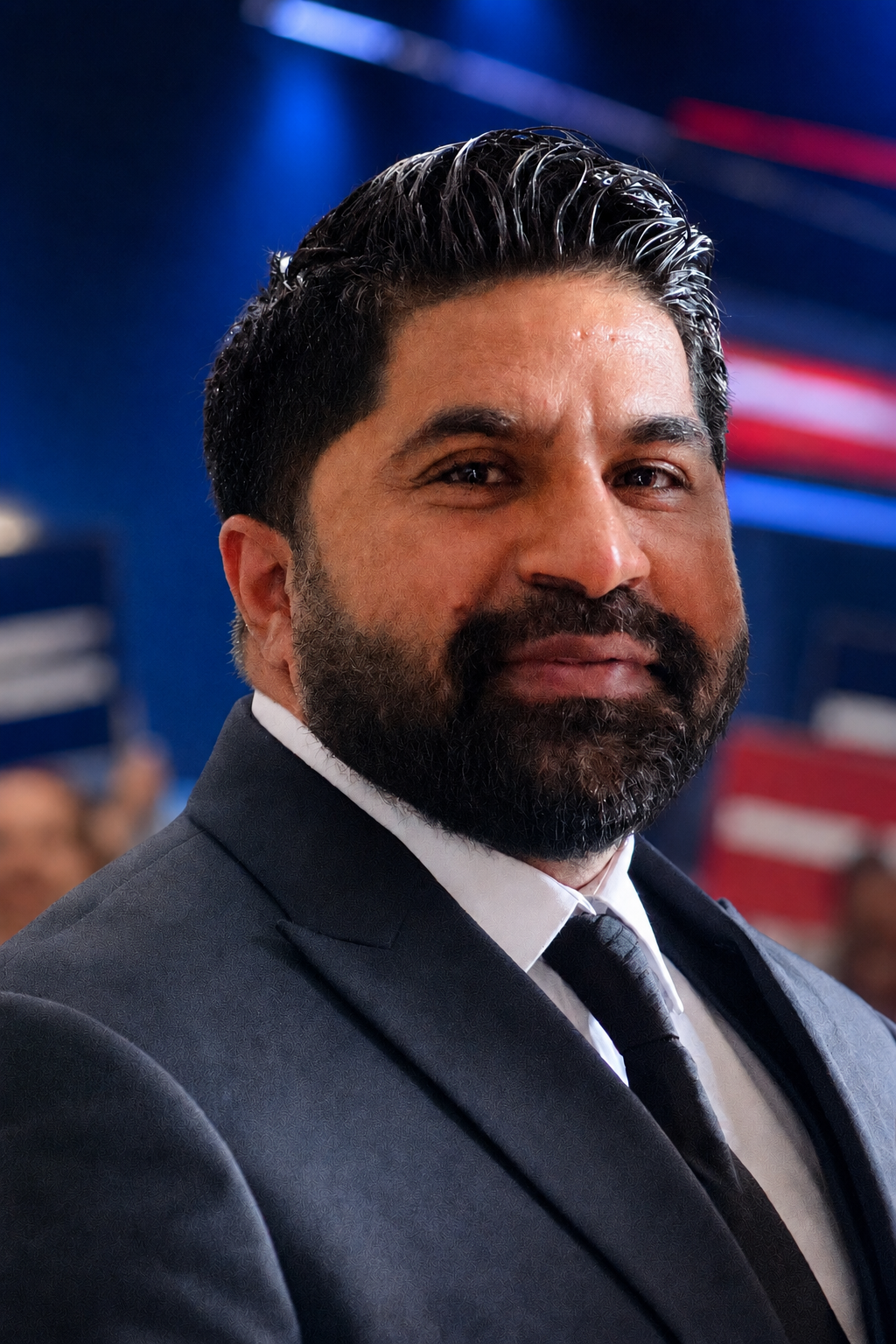
My career started in 2005 with the NYPD Auxiliary Unit in Queens. That's where I learned what the job actually asks of you: service, accountability, and showing up.
I went full-time with the Savannah Metropolitan Police Department in Georgia for four years, then spent seven years with the Philadelphia Police Department, looking for broader experience and harder work.
While I was in Philadelphia, I answered a call involving the Amtrak Police Department. That call is the reason I'm here. I didn't end up at this department by accident, I chose it — and I've spent the last five years right here with you.
Sixteen years on the job. I know what it demands, and I know the protections we need to do it safely.
This campaign isn't about promises. It's about action.
The platform
Two priorities
In almost every conversation I had, the same two issues came up. So let me be direct about where I stand.
-
Priority one
Fix the broken IOD policy
If you get hurt on duty, it should be IOD. Period.
Right now your injury has to fit one of four narrow qualifiers, and you have to guess the right one the moment you file or you waive your right to claim any other. An officer shouldn't need to be a lawyer to get covered for getting hurt on the job. And even if you qualify, full pay stops at six months and drops to 80 percent — your mortgage doesn't drop 20 percent, and neither does your grocery bill. That forces officers back before they've healed. I'll fight to rewrite Rule 27: no qualifiers, no waiver trap, full pay from day one until your doctor clears you.
-
Priority two
Time off, and limits on forced overtime
Mandatory overtime is not a staffing plan. It's management's failure, and you're paying for it.
An exhausted officer is not a safe officer. Management needs a real staffing plan for departing, promoted, and retiring members, and I'll hold them to it. In the next contract, time off goes to the center of the table: more annual leave, more personal days, mental health days you don't have to lie to use, and hard limits on forced overtime. Alongside that, modern equipment, an end to training deficiencies, and a confidential way to report safety concerns directly to the union.
And four commitments
-
Stronger contract, stronger pay
Your priorities set the bargaining agenda, not a small group behind closed doors.
A bargaining team with officers from every region. Member surveys before we negotiate. Frequent updates while bargaining is under way. And holding management accountable for every single contract violation.
-
Transparency and communication
You should never have to guess what your union is doing.
Monthly updates from your President. Published meeting notes. Published financial summaries. And a direct line of communication between leadership and members, so you hear decisions from me rather than through the rumor mill.
-
Accountability and representation
Every phone call returned. Every grievance handled the same way.
Every grievance gets a prompt response and is tracked from start to finish, with proper representation on every shift and in every division. That applies regardless of assignment, seniority, region, or who you know — and it includes Communications Officers and Security Officers, who are members of this unit, not support staff.
-
Unity and member engagement
Six regions, one unit. When we stand together, our voice is impossible to ignore.
I'll come to you: meetings in every region, open lines between them, and real ways to take part in decisions instead of hearing about them afterward. We come from different assignments and different places, but we face the same job.
Where I stand
The membership sets the standard for respect, fairness, and working conditions.
Not management.
That's not a slogan. It means the people who do the job set the terms of the job — and when one of us is challenged, all of us answer.
How to vote
Voting is electronic
September 1–15, 2026
- Opens Tuesday, September 1, 2026 — 9:00 a.m. Eastern
- Closes Tuesday, September 15, 2026 — 9:00 a.m. Eastern
- How Electronic ballot. Watch for it and vote as soon as it arrives — don't leave it until the last morning.
- Eligibility You must be a member in good standing. If you're unsure whether your dues are current, check now — not on September 15.
Commit to vote
I'm not running to make headlines. I'm running to serve.
I respectfully ask for your vote for President of the Amtrak Police Labor Committee.
If you have questions about where I stand or what I intend to do, please reach out. My cell and email are at the bottom of this page, and I answer both.
Thank you
I've got it. If you left a note, you'll hear back from me directly.
Reach me
Every call returned.
That's the standard I'm asking you to hold me to. Start before the ballot opens.
Let's move forward together.